

Image to the left of Time, our safari guide at Singita Pamushana!
I’m pretty sure safari guides have an extra sense in addition to the normal 5 ones that we have! And that sense would be the ability to sense the presence of even the tiniest creature in the vicinity. Although I’ve been on countless African safari tours, I am always amazed by a guide’s ability to find camouflaged animals in the bush, forest, and even lakes and rivers!
Depending on which accommodations you are staying at, your safari experience may include BOTH a safari guide / driver and a tracker or just a safari guide / driver. A tracker sits out on a seat that is at the front of the vehicle and looks out for wildlife as the safari guide is driving the vehicle. Your safari guide will also have his / her eyes out, searching intently for wildlife that is hiding from predators or camouflaged into the scenery. I have found that safari experiences with trackers have been equally as fantastic as those without the trackers. It’s just a nice added bonus to have one on board – they act as another set of eyes to look out for wildlife.
In addition to wildlife, your safari guide will also keep an eye out for signs of animals, such as fresh tracks or droppings, and will even listen for sounds of animals and birds. For example, wild dogs make a very distinct squeaking or whimpering sound, which many guides will listen for when on the search for these elusive creatures. A lion’s roar in the distance can also be a clue that a male lion is on the move and your guide will do his / her best to track that lion. Guides will also periodically stop the vehicle to explain certain plant life that you come across or point out tracks in the sand and mud and explain their methods for tracking animals. It is quite fascinating!
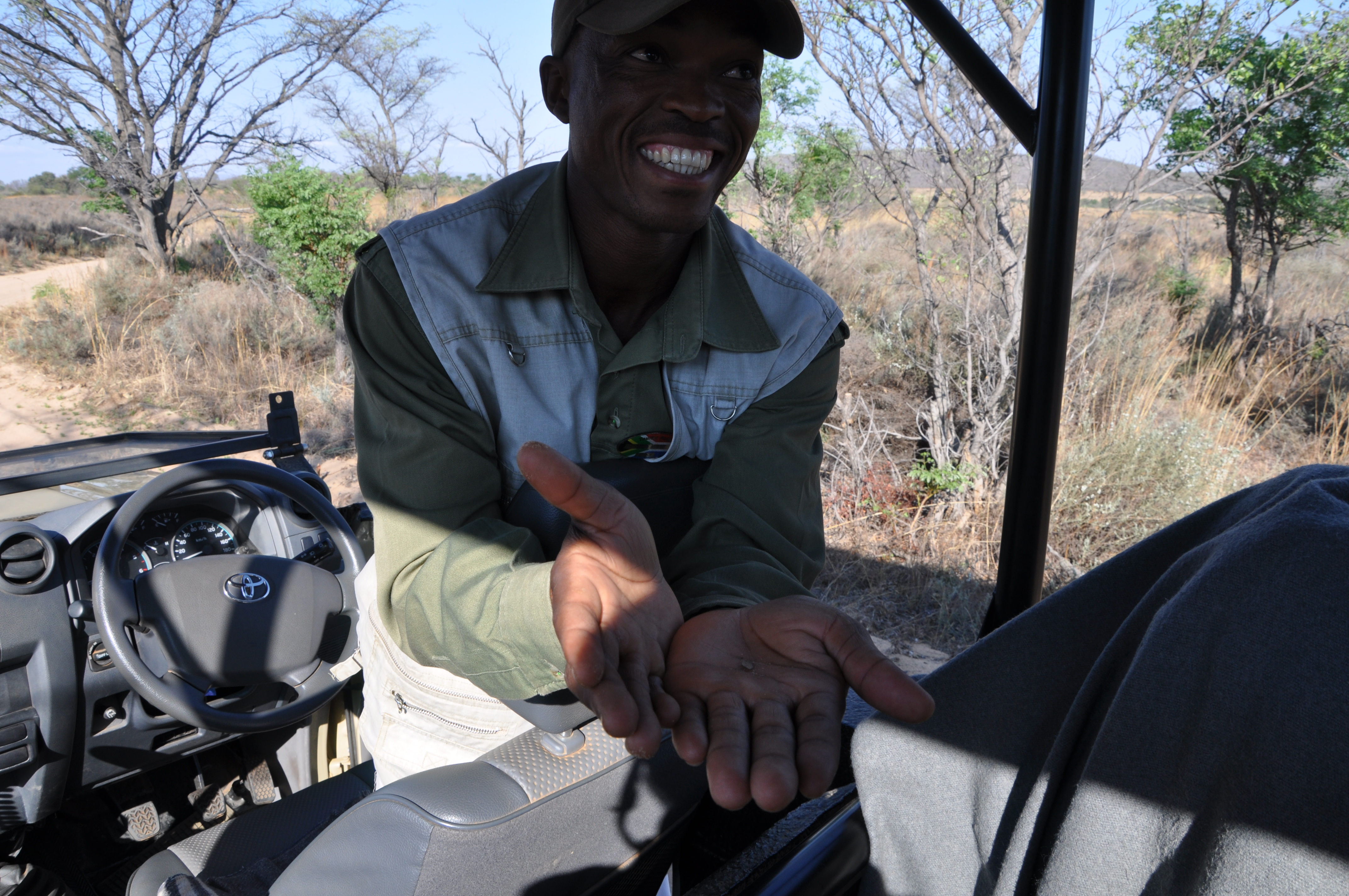
Guides will even notice insects in the wild! For example, we were on a game drive in the Entabeni Game Reserve and our guide stopped the vehicle to point out an antlion – one of the Little Five. He explained that an ant lion is named for its large head, jagged jaws, and bristle-covered body and its prey is, well, ants! The antlion will dig little holes in the sand where they will wait for another insect to fall into their trap before eating them. I can assure you that none of us knew there was an antlion in the area – they’re just a touch larger than the average ant.
Below is a picture of our guide holding an antlion in his hand:
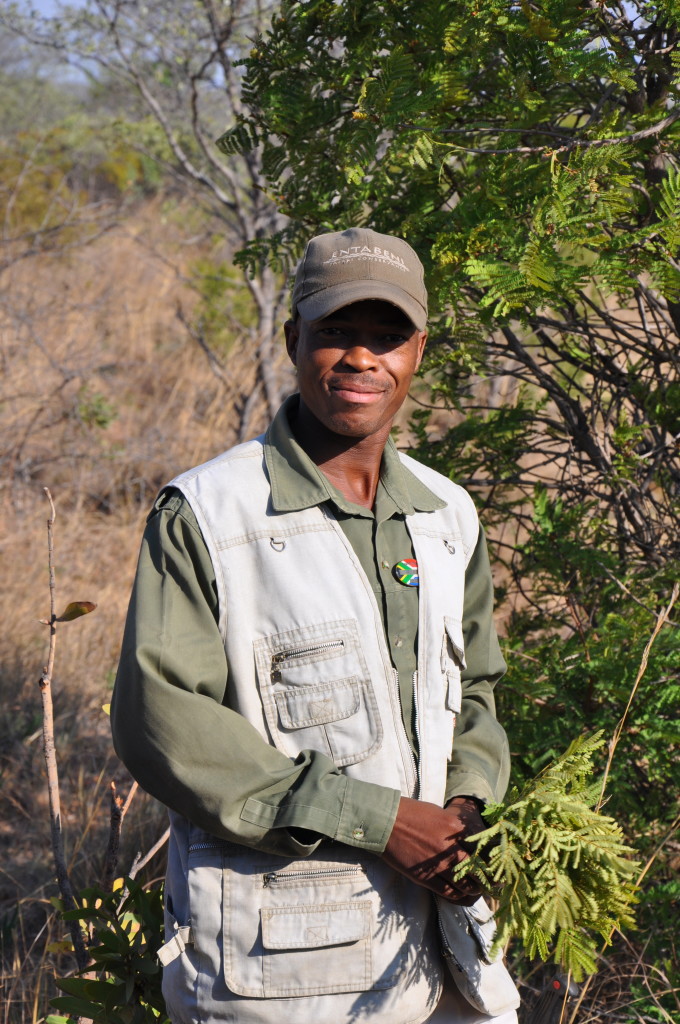
During the same game drive, our guide picked off a fern-like plant and passed it around the vehicle, explaining that it was referred to as “Bushman’s toilet paper” since it’s soft and can be used for toilet paper in the bush!
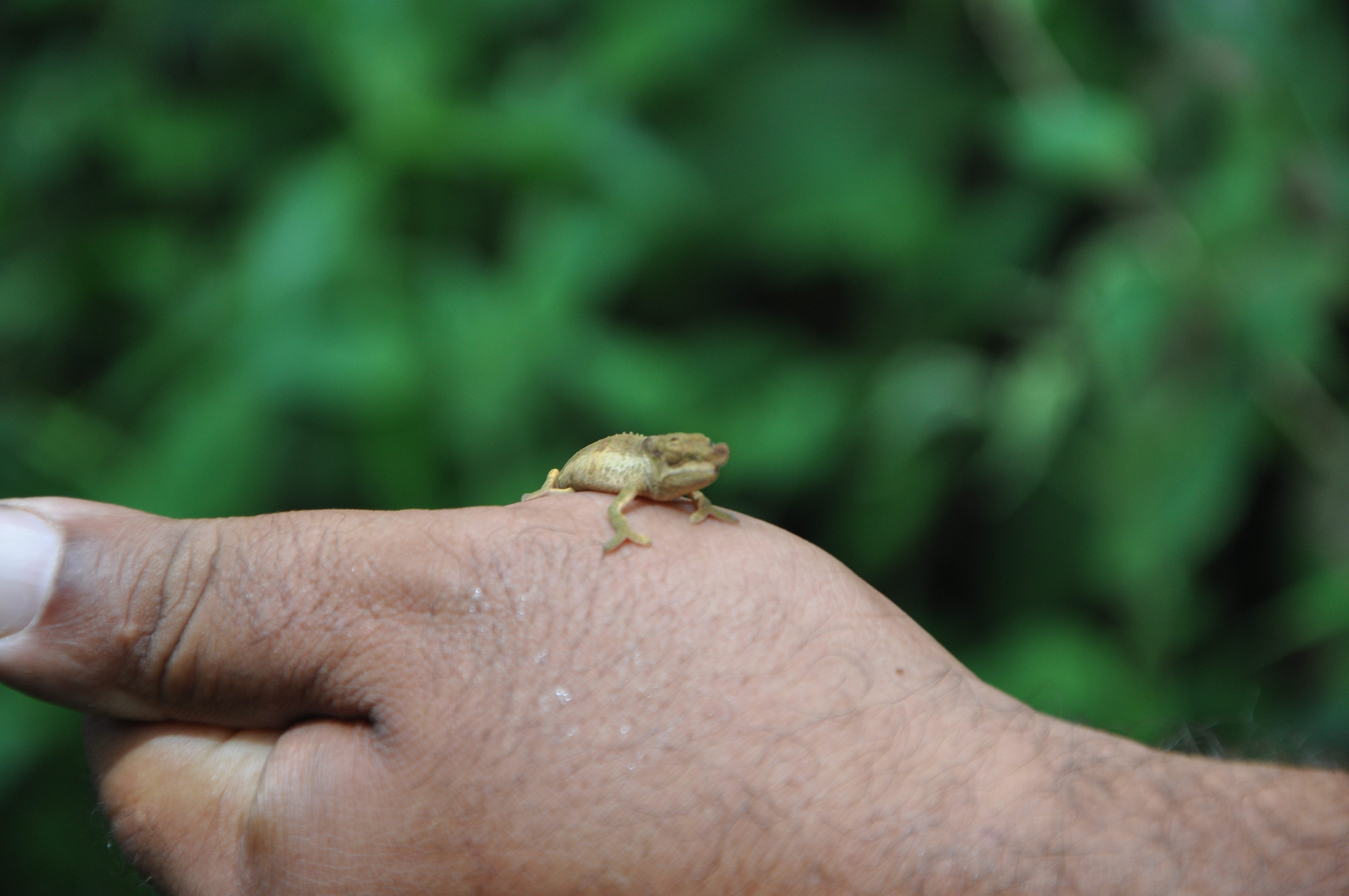
Safari guides are also excellent at spotting wildlife during walking safaris. Here, they can really get their hands dirty, searching for wildlife. Without the sounds of a vehicle’s engine, they can listen intently for bird calls and other calls of the wild, flip over rocks, look for insects and reptiles, and really explore. In fact, on a walking safari in Madagascar, our guide observed a teeny tiny chameleon on a tree branch and placed it on his finger to show us. See below for a picture of this incredible sighting!
During another walking safari in Madagascar, this time at night, our guide spotted a mouse lemur in a tree – it was pitch black outside and he was searching for the lemur’s eyes reflecting off his flashlight. It was quite impressive that he spotted this little creature! See below for a picture of this adorable and very tiny lemur:

So as you can see, guides are practically super human! They can sense all different types of creatures and share their findings with their safari-goers. It is such a treat to be out in the African bush on safari with a guide. They have the fascinating ability to open your eyes to the beauty of nature and point out things you might have never noticed before.

The secret is knowing what the bush should look like and then it is easy to spot something that is out of place. The more you do it, the easier it becomes.
Ah ha!! Thanks for sharing, Graham 🙂 It’s amazing how guides can come to know nature so well.