

We’ve introduced you to the Big 5 and the Little 5, but now it’s time for you to meet the Big Marine 5: The great white shark, the African penguin, the Cape fur seal, the southern right whale, and the dolphin.
The continent of Africa is spotlighted on a regular basis across National Geographic, The History Channel, and The Discovery Channel for its thousands upon thousands of miles of exotic and endemic wildlife. And for good reason—not only is it one of the most stunning continents on the planet, but it’s also the only place on earth where the Big Five (lion, leopard, rhino, elephant, Cape buffalo) coexist in their natural habitats. But what many people don’t realize is that the coast of Africa is just as rare and exotic as the continent itself. Beneath the surface of the Indian and South Atlantic Oceans lies an entire world of mystery that is less explored than our solar system!
All of the Big Marine 5 can be found off the coast of South Africa. Below, we’ve spotlighted each of the Big Marine 5:
Great white sharks: As some of the most feared predators on the planet, the great white shark has been the main star in Hollywood films and The Discovery Channel has even dedicated an entire week of broadcast to these haunting creatures.
Below are some interesting facts about the great white shark:
- Great whites can swim at a speed of up to 15 miles per hour. Do you know how fast you can swim? Underwater, it’s less than 1 mile per hour . . .
- Commonly misunderstood, the great white does not have a motive to kill humans. In fact, they don’t even like humans! Most of their attacks on humans have been “tasting bites,” to see if it’s something they want to eat. Often times, they don’t like what they taste and swim away in search of a tasty seal or penguin.
- The average length of a great white is 15 ft., but some reaching lengths of over 20 ft. have been recorded. The average weight is roughly 5,000 lbs.
- Great whites can sense small amounts of blood in the water from up to 3 miles away.
- The great white can breach nearly 10 ft. in the air when attacking its prey from beneath.
- There is such a thing as virgin shark births! In rare cases, a female great white can reproduce without having any contact with a male, which is referred to in the science world as parthenogenesis.
- Great whites can live in depths of over 4,000 ft.!
- To prevent their eyes from being damaged, a great white will roll its eyes in the back of its head when it bites a victim.
Best way to view the great white is on a shark cage diving experience in South Africa.

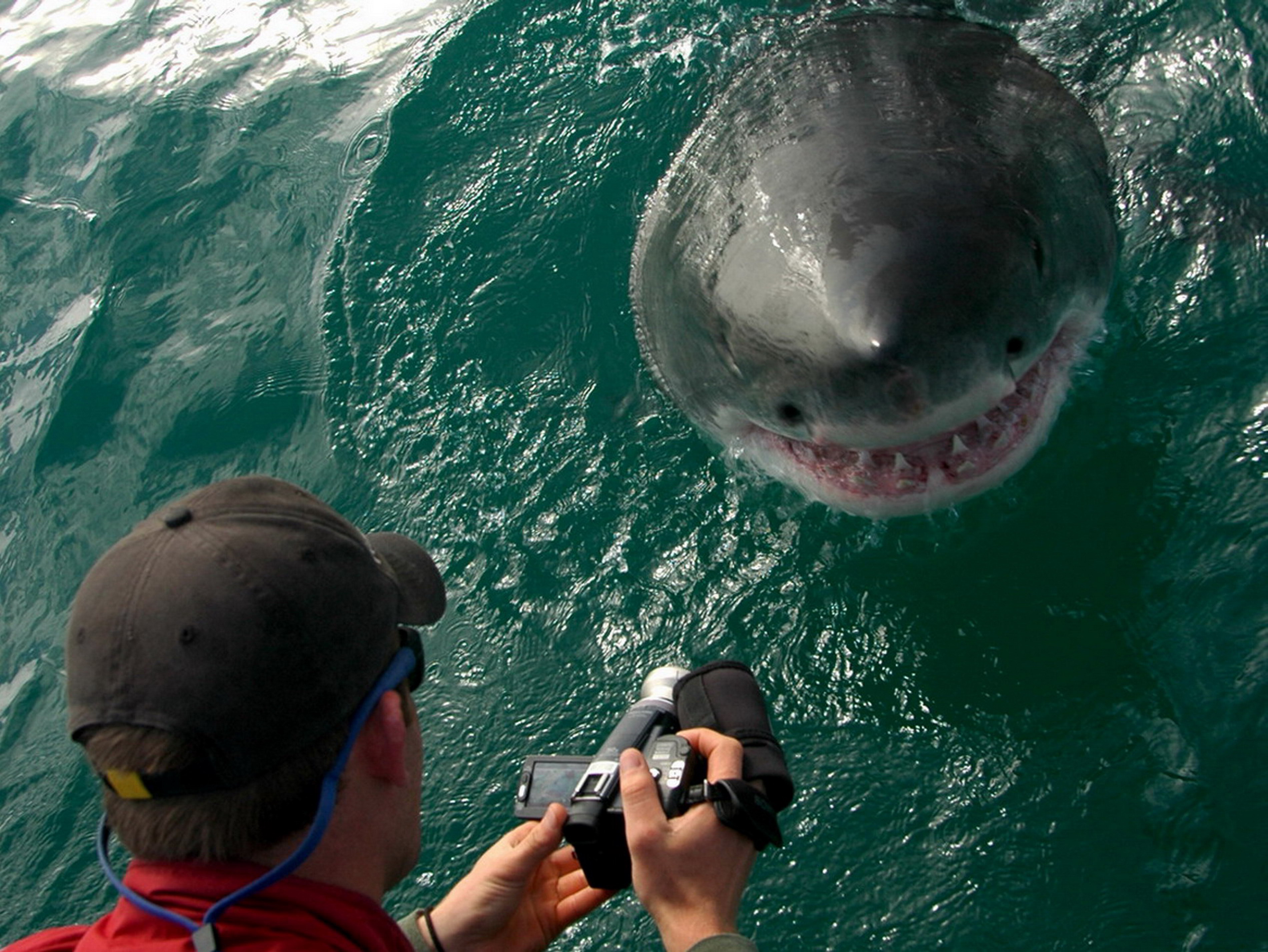
Images above taken from Grootbos.com
Southern right whales: Found off the coast of South Africa, southern right whales are commonly spotted during the months of June through November.
Below are some interesting facts about the southern right whale:
- Right whales got their name from whalers who labeled them the “right” whale to kill during their hunts.
- Right whales have comb-like teeth called baleen that they use to collect tiny food elements (such as zooplankton) from the ocean. A single baleen can measure up to 8 feet in length.
- When whalers killed a right whale, they would sell their blubber to be used in corsets, buggy whips, and other items during the 17th, 18th, and 19th centuries. Today, whale hunting is internationally outlawed.
- Female right whales become sexually mature at the age of 10 and go through a yearlong pregnancy to produce one offspring.
- The southern right whale can grow up to 50 ft. in length and weigh an astonishing 70 tons.
Travelers on a South African safari vacation can embark on whale watching tours or view them from a variety of bays in the southern region of South Africa.

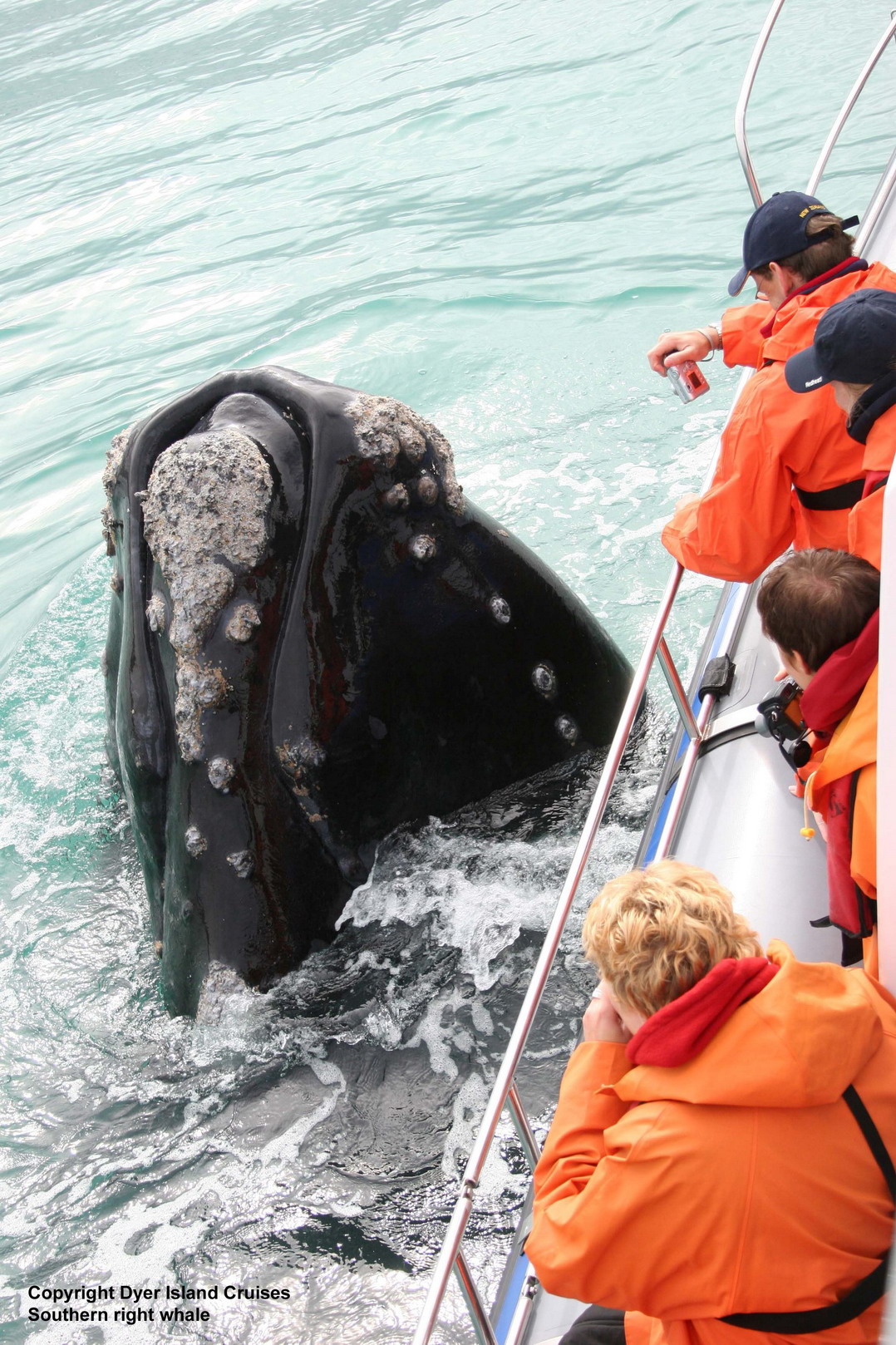
Images above taken from Grootbos.com & are copyrighted by Dyer Island Cruises
African penguins: Found along various beaches in South Africa, the African penguin enjoys its sunbathing!
Below are some interesting facts about the African penguin:
- The African penguin is one of 17 species of penguin. Out of the 17 species there are four types of warm weather penguins: Magellanic penguin, Humbolt penguin, Galapagos penguin, and the African penguin.
- Only 40% of African penguins reach adult age, at which time they find a mate and stay with them for the rest of their lives.
- The African penguin is the only penguin found in South Africa and is also known as the jackass penguin. The name jackass penguin came about because of the honking sound the penguins make, which is extremely similar to a jackass call. Penguins emit this sound in order to help find a mate, or help lost chicks find their parents.
- What keeps these little guys from overheating in the hot African sun? Bare skin around the penguins’ eyes, beak, flippers, and feet help them release body heat to cool.
- Beak size determines if the penguin is a male or female. A male penguin has a longer, wider beak than a female.
- Adult African penguins tend to be approximately 27 inches tall and weigh between seven and eleven pounds.
- Penguins enjoy eating anchovies, squid, and small crustaceans, which they pierce with their beak before eating.
- Penguins’ skin can adapt to a wide range of temperatures. Their feathers can act as a protective coat around their body in cold temperatures, and when penguins become too hot, they can ruffle their feathers and hold out their flippers as a way to expose their skin to the cool air.
- African penguins have an uropygial gland at the base of their tails that secretes an oil the penguins use to smear over their feathers to keep them waterproof.
One of the most popular places to view the African penguin is on Boulders Beach; however, this beach can become overcrowded with tourists during certain times of the year, so it’s recommended to go during off season or visit a neighboring beach to observe the penguins.
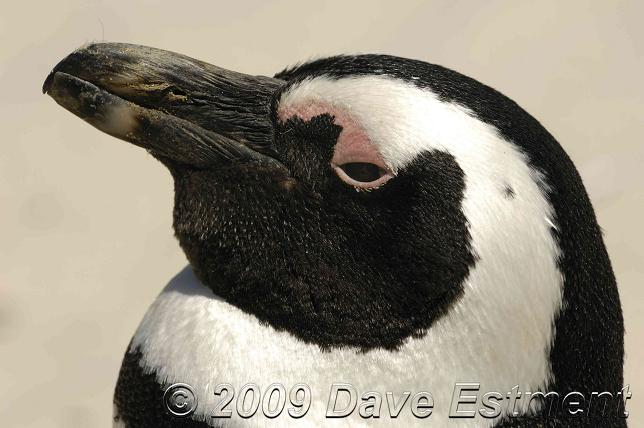
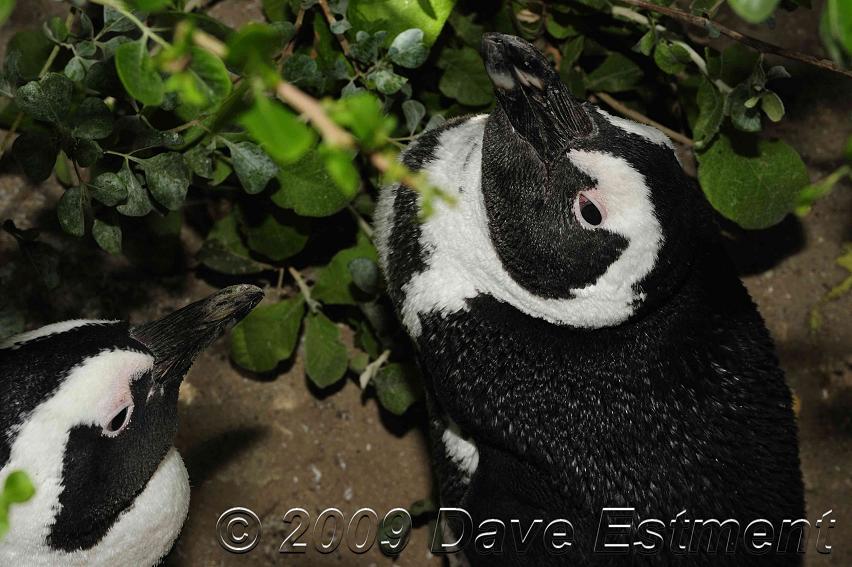
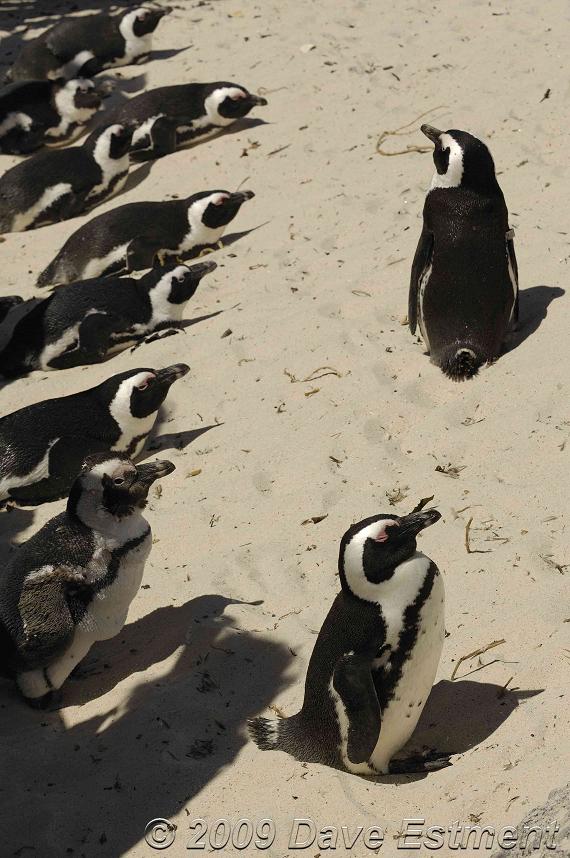
Images above taken by Dave Estment, noted wildlife photographer
Dolphins: Dolphins are some of the most spectacular creatures to witness beneath the water. Not only are they playful, but they are extremely intelligent and fascinating to observe in their interactions with one another.
Below are some interesting facts about dolphins:
- Dolphins can reach up to speeds of 18 mph and often surface two or three times every minute to take a breath of air.
- Dolphins travel in groups known as pods, and communicate with each other using a variety of squeak and whistle variations.
- The bottlenose dolphin can track their prey beneath the water using a system known as echolocation. Every second, they make nearly 1,000 clicking noise that travel through the water until they bounce off objects and back to the dolphin. The dolphin can then tell the location, size, and shape of the object.
- Bottlenose dolphins can reach anywhere between 10 and 14 ft. in length and can breach nearly 16 ft. out of the water!
Cape fur seals: Found on the coast of Namibia, and parts of South Africa, the estimated population size of the Cape fur seal is approximately 1.5 to 2 million individuals—nearly 1,000,000 more than its sister species, the Australian fur seal. Observing this creature in its natural habitat is a treat for anyone, as this species is only found in one region of the world, southern Africa.
Below are some interesting facts about the Cape fur seal:
- The Cape fur seal can live up to 25 years of age and can grow up to 7.5 ft. in length and weigh anywhere from 75 – 245 lbs.
- The Cape fur seal’s primary diet consists of sardines, anchovies, mackerel, and some types of crustaceans and cephalopods, which they catch nearly 112 miles off shore. These animals have also been known to snack on other furry friends including penguins and Cape gannets (a sea bird).
- As expert divers, the Cape fur seal can dive up to an astonishing 1,300 ft. beneath the surface! Compared to expert PADI divers, who can usually only dive up to 200 ft., these animals are truly magnificent.
- The primary predators that feast on the Cape fur seal in the water are sharks and killer whales, and on land the main predators are the black-backed jackal and the brown hyena.
- Nearly two months after giving birth, the female seal can be out to sea for up to two weeks in search of food for her pup. When the female returns from sea she lets out a call that attracts all the pups in the territory, but only gives attention to her own.
- During mid October, males come ashore to fight for their breeding grounds. Once breeding grounds are established by the males, the females will come ashore and also fight for their breeding grounds among other females. The female seals always claim their territory within a male’s and will then mate with that male. Males have been known to have up to 50 females in their territory. That’s a lot of female mates for one male.
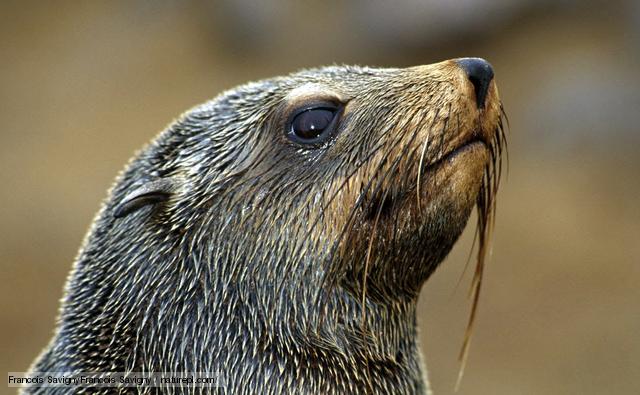
Image above taken from BBC.co.uk
Have photographs of the Big Marine 5? Share them with us on our Facebook page!