


Today, we’re talking about GORILLA TREKKING, undoubtedly one of the most life-changing, awe-inspiring experiences you can have in Africa!
(And that’s saying something, because Africa is filled to the brim with life-changing, awe-inspiring experiences!)
Below, we’ll answer all of the most pressing questions about this bucket-list trip!
GORILLA TREKKING FAQs

How hard is the trek?
The short answer is — it depends! The more helpful answer is that the trek can vary between 30 minutes and 8 hours. Since you’re in search of mountain gorillas, well, they live in MOUNTAINS. Elevations can be higher than you’re used to, and the hike to reach the gorillas is uphill, through potentially wet or muddy areas with lots of vegetation. That being said, visitors are assigned to groups depending on fitness levels, and porters can be hired to help carry bags and lend a helping hand during the difficult parts of the hike.
What should I wear?
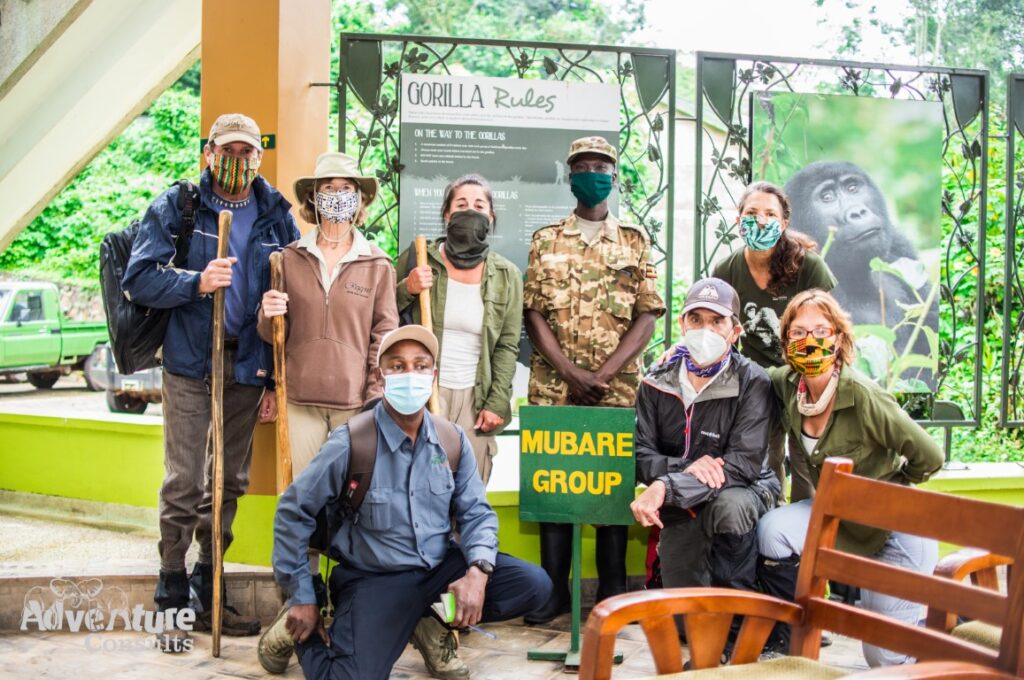
Definitely choose long-sleeved shirts and long pants in neutral colors, like khaki, green, and brown. Moisture wicking clothing is advisable, since you will certainly be sweating in the hot, humid climate. Consider a pair of gloves to protect your hands from the vegetation and a pair of gaiters to protect your legs as well. Sturdy, comfortable, waterproof boots are a must. You want to be able to grip potentially slippery surfaces and hike over and through dense vegetation with ease. Wear tall socks so that you can tuck in your pant legs for extra protection.
What do I need to bring?
You’ll want to have plenty of water with you, as well as a camera for when you arrive. A poncho is usually worth carrying in case of a sudden rainstorm. Carry a waterproof daypack, and be sure to take measures to ensure your camera and/or phone are protected from the elements. You’ll probably want to use a walking stick, but most lodges will provide them to you for use on your hike. Don’t forget to bring cash for tipping your guides and porters!
What should I NOT bring?
Don’t wear navy blue or black clothing, as it attracts tsetse flies and other insects. Don’t worry about lugging along any kind of extra camera flash, since you’re not allowed to use a flash while with the gorillas. Don’t wear or bring camouflage or military-style clothing, as it’s illegal many places in Africa.
When should I go?
The best time to visit the gorillas is in the drier seasons of June to September and December to February, but gorilla trekking is offered year-round.

What else should I know?
No matter where you go, you get just one hour to observe the gorillas before it is time to head back. Only one group of 8 guests visits each gorilla troop per day. Guests must be at least 15 years old to participate in gorilla trekking.
And the big question … WHERE should I go?
The two places we recommend for gorilla trekking are Bwindi Impenetrable Forest National Park in Uganda and Volcanoes National Park in Rwanda. You can choose one or the other or you can easily combine the two to get the gorilla trekking experience in both countries. Need help deciding on one country? Never fear, here’s a comparison for you!
UGANDA VS. RWANDA

TERRAIN
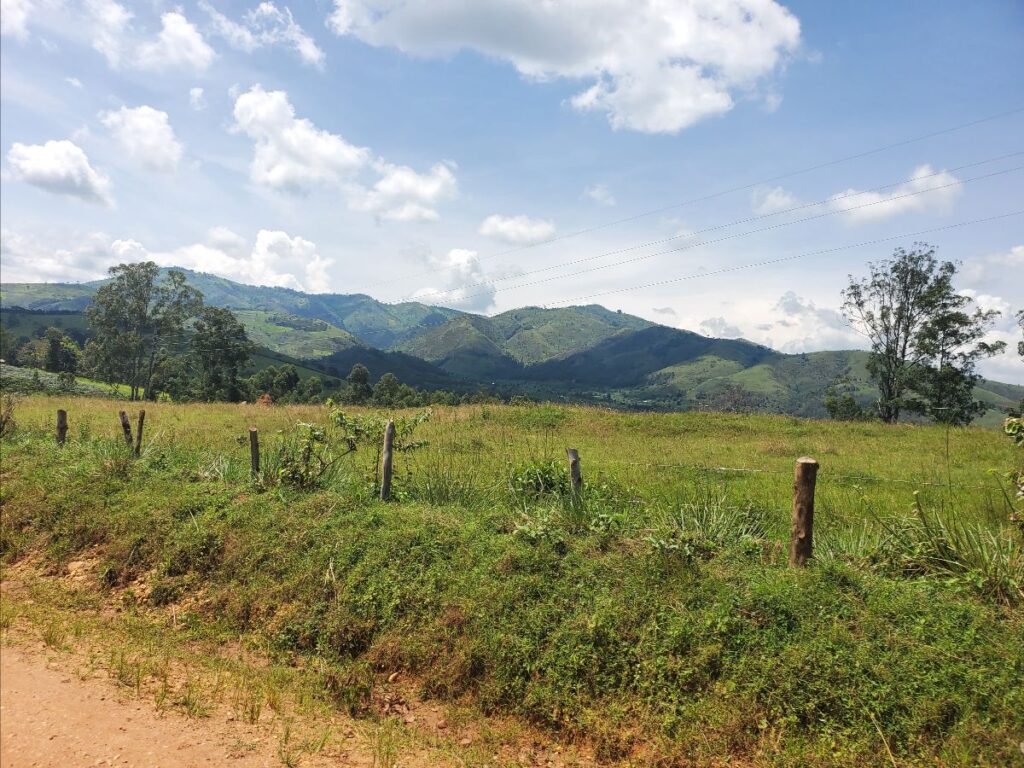
Bwindi Impenetrable Forest National Park is, well, largely impenetrable. The terrain is very dense, lush forest. It is absolutely stunning, but treks in Uganda are generally considered more challenging. Rwanda is home large bamboo fields and generally offers less difficult trekking with more open routes and often less steep and slippery hiking conditions.

NUMBER OF GORILLAS
Uganda is home to a total of 20 habituated gorilla troops that can be visited; Rwanda is home to 12. Each group can be visited by up to 8 people per day, so overall there are more permits available per day in Uganda than in Rwanda.
GETTING THERE
Rwanda’s Volcanoes National Park is easier to access than Bwindi. Trekkers in Rwanda can fly into Kigali and then drive for about 2.5 hours to the entrance to the park. On the other hand, Bwindi is a 9-hour bumpy road trip from the international airport in Entebbe. It is possible to fly from Entebbe to Bwindi or to fly into Kigali and drive north to Bwindi, taking about 4 hours. (Or, just make a trip of it and stop at some amazing destinations along the way!)

PERMIT PRICING
Gorilla trekking permits are more expensive in Rwanda than they are in Uganda. A one-day permit in Uganda for a non-resident is $700, and in Rwanda it is $1,500.

GORILLA HABITUATION EXPERIENCE
Uganda is the only country to offer a gorilla habituation experience, which allows visitors to spend at least 4 hours with the gorillas, both observing and participating in habituation activities. There are two gorilla families that are currently a part of this program, and only 4 guests can visit each family per day.
BEYOND GORILLAS
While gorilla trekking may be the highlight of your trip to Uganda or Rwanda, you probably will spend only one or two days on this activity, and if you’re flying all the way to Africa, you’ll probably want more to do while you’re there.
Both countries offer chimpanzee tracking, but it’s much more dependable in Uganda’s Kibale National Park. Rwanda is a better bet for seeing golden monkeys.
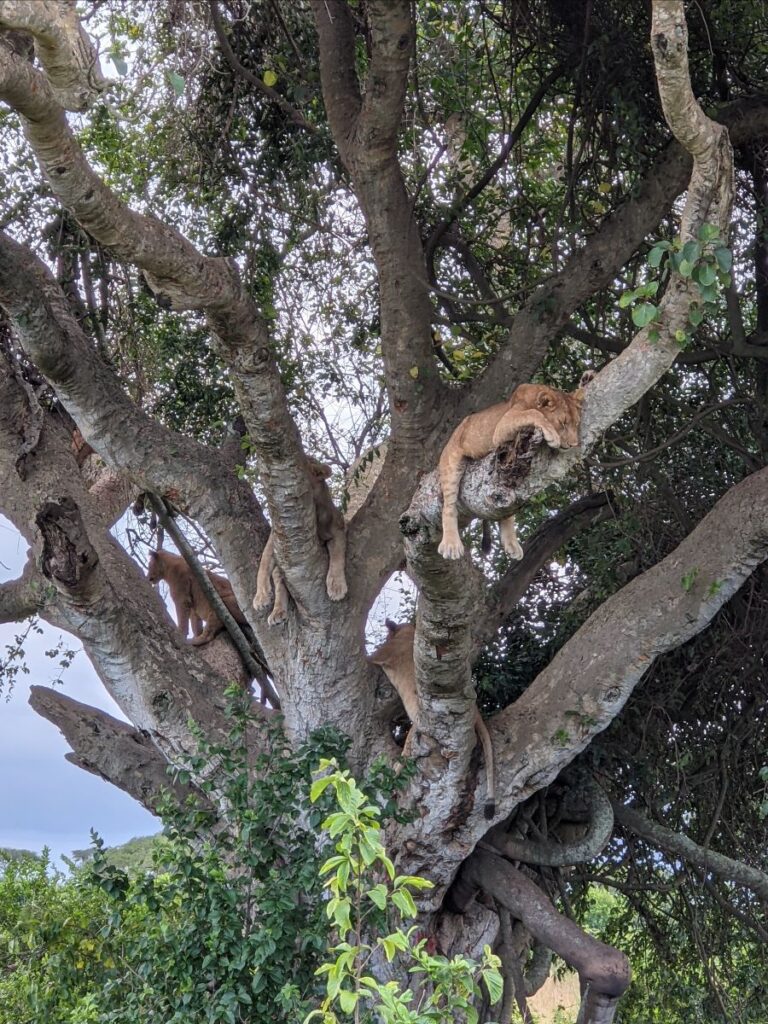
If you want a traditional big game safari experience, Uganda’s Queen Elizabeth National Park and Murchison Falls National Park are excellent options. Uganda also offers a variety of options for learning about human-wildlife conflict and anti-poaching projects.
If you are a birder, Uganda may be the best option, as it is home to 33 percent of the world’s birds. It is also a great place for whitewater rafting and river safaris along the Nile.
In Rwanda, Lake Kivu offers excellent inland beaches, and the Nyungwe Forest is home to the world’s largest troops of black and white colobus monkeys. Rwanda is also home to Kigali — considered one of the cleanest and safest cities in Africa.
I hope this helps answer some of your questions about gorilla trekking and the differences between Uganda and Rwanda.
Please reach out to Hills of Africa here: www.hillsofafrica.com/contact-us with any questions that you may have. We’re here to make your dreams of Africa come true!